Magic growing worms experiment
Create wiggly, rainbow-coloured "worms" from tissues or kitchen roll that grow and reveal hidden colours when you water them.


This one's a hands-on activity that teaches science in a playful, magical way.
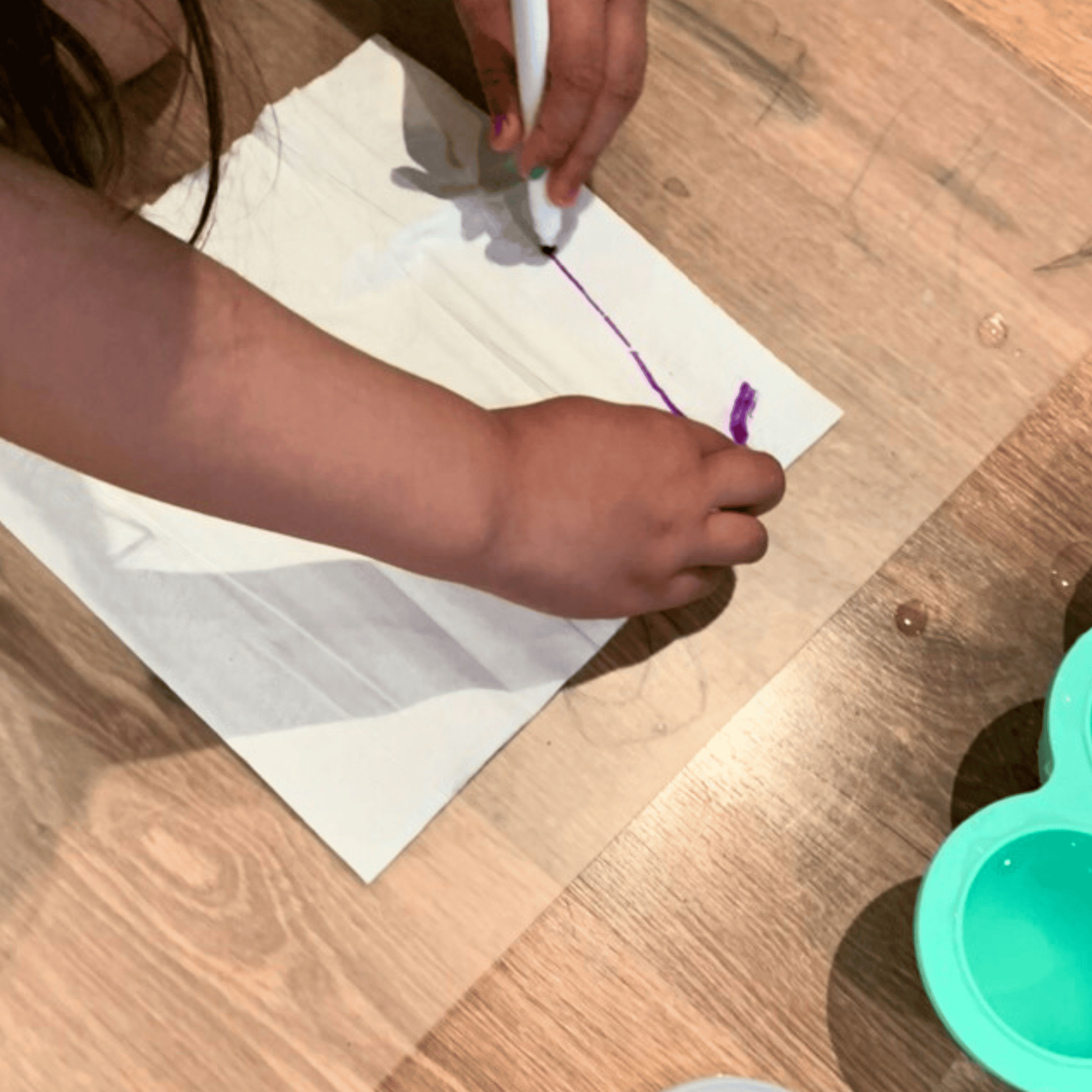
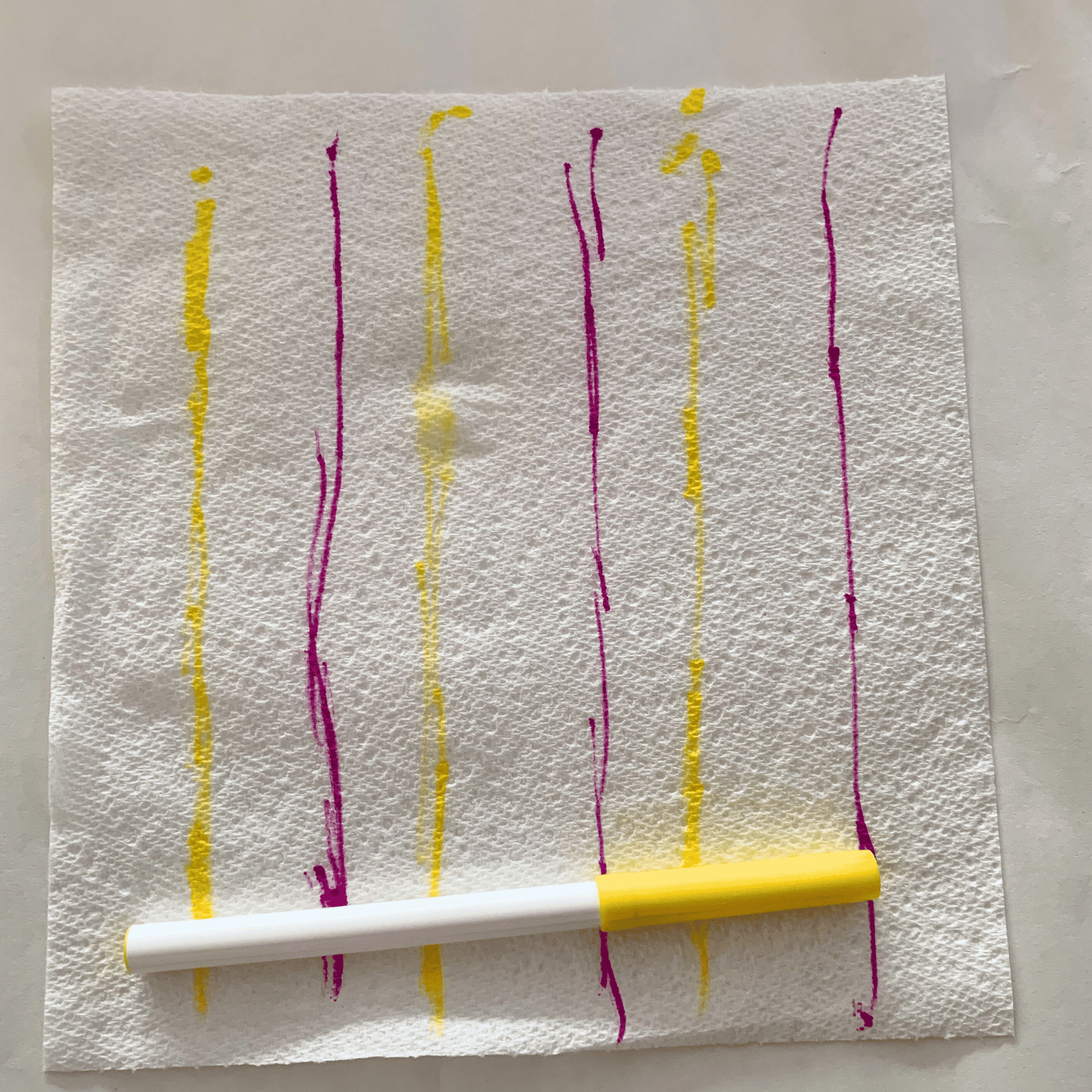
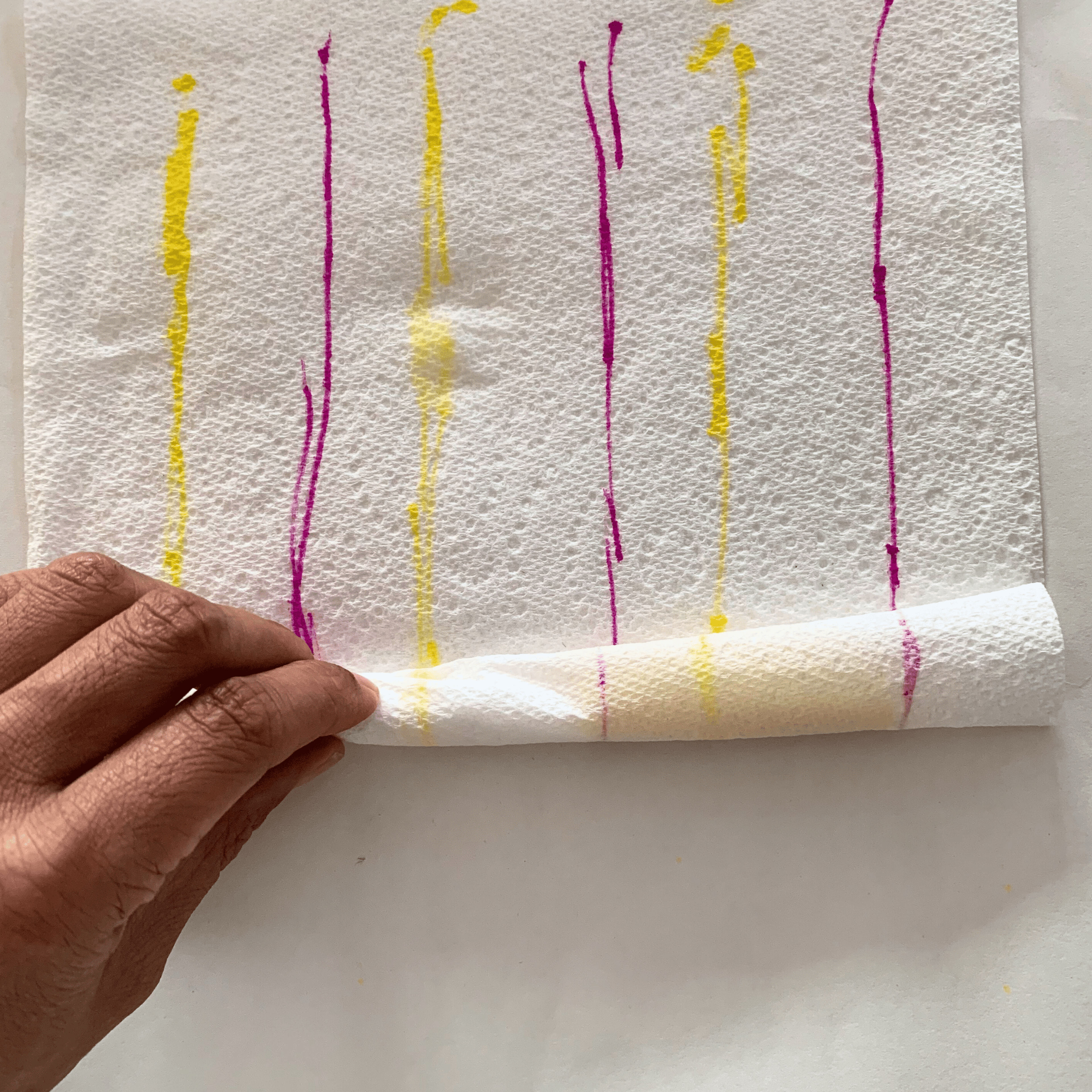
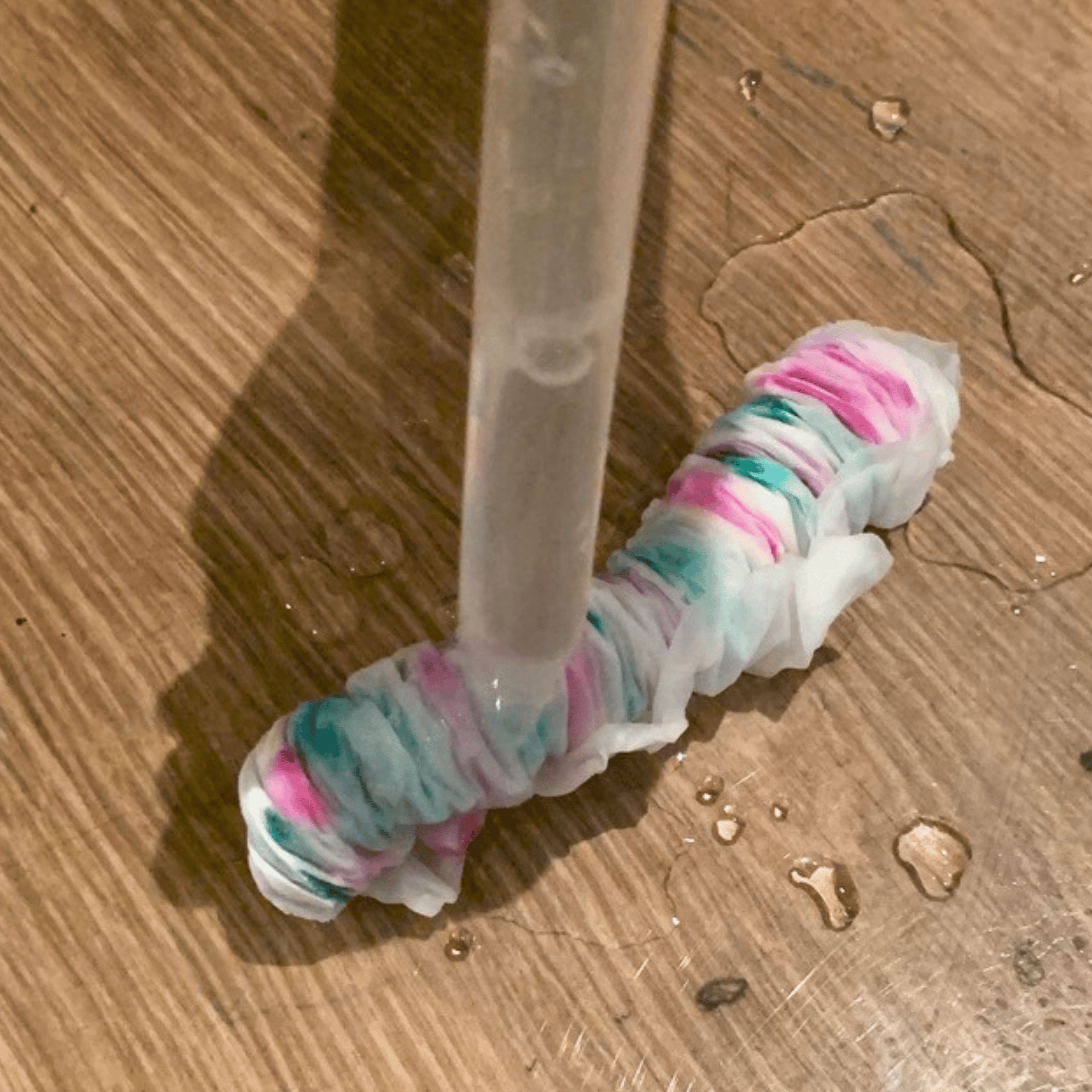
Using kitchen roll or tissues, draw colourful patterns along the length of the paper, then roll it up tightly around a marker or pencil. When water is added with a dropper, the paper "grows" and wiggles, revealing hidden patterns as the colours spread.
This is a simple demonstration of capillary action, where water moves through the paper and carries the colour along with it - a subtle STEM concept made magical for little learners!
Beyond the science, it’s an excellent fine motor activity: rolling the worms carefully, using droppers to control the water, and observing the slow reveal all develop coordination, hand strength, and concentration.
It’s also visually captivating and playful for grown-ups - a wonderful little experiment to spark curiosity and wonder, whether you’re learning together with kids or enjoying some mindful creative play on your own.
Materials
Prep
Step 1:
Cut a strip of kitchen roll or tissue (length depends on your desired worm size).
The next steps can be prepped by you or part of the play!
Step 2:
Draw colourful patterns along the strip using markers.
Step 3:
Roll the paper tightly around a pencil or marker.
Step 4:
Place rolled worms on a tray for easy water access.
Play
Step 1:
Use a dropper to slowly add water to the rolled-up paper.
Step 2:
Watch as the water “wakes up” the colours and the paper unrolls and wiggles like a worm.
Step 3:
Encourage experimentation - try different colours, roll tightness, or dropper speed.
Step 4:
Observe the magic of the colours spreading while noticing the science happening.
Step 5:
Discuss what is happening - e.g. capillary action moves water along the paper, carrying the pigment with it.
Extend
Pattern fun: Try different patterns to see how the colour combinations spread
Shape Experiments: Roll worms with different widths or lengths to see how it affects the wiggling.
Worm Races: Place two worms on different trays and watch which "grows" faster.
Story Play: Use the wiggly worms (wet or dried) in imaginative stories or create little worm characters.
Science Connection: Talk about plants and how capillary action helps water travel from roots to leaves.